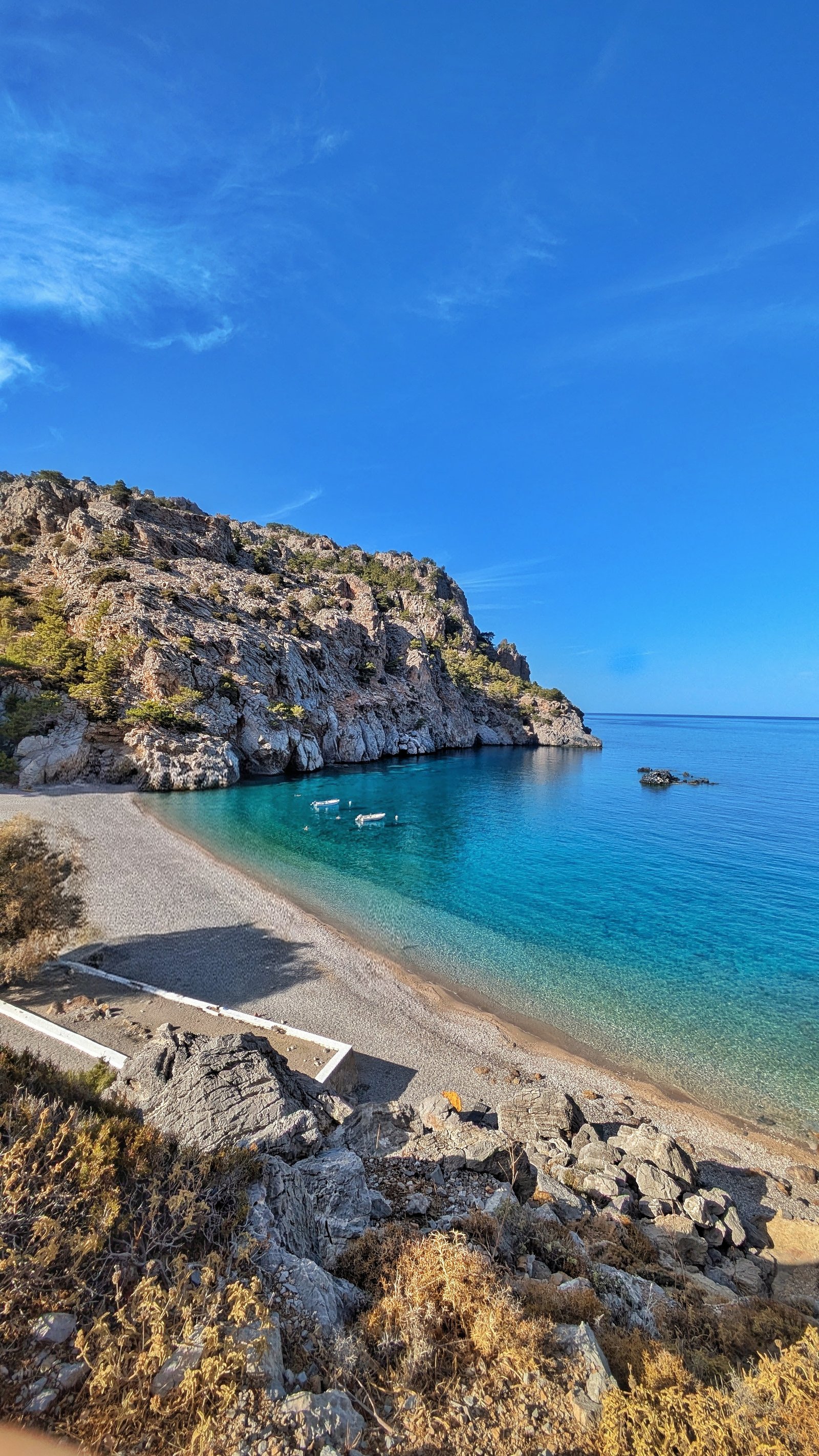
Ahata doesn't appear on the lists of the best beaches in Karpathos. It has no proper car park, no seasonal tavern, no umbrellas for hire. It has dark volcanic gravel, a seabed that changes colour three times in thirty metres, and enough peace to feel like a private spot. That's exactly why the locals go there.
The road to reach it drops down from the mountain along a narrow hairpin bend with a view of the sea. If you miss the turn for the car park — which is a small dirt clearing — you drive past without noticing. That's Ahata's first line of defence: you don't find it by chance. You have to look for it.
At Ahata I met a Karpathian family who had been coming for forty years. The grandfather told me that as a child he used to fish on that seabed. The seabed was still there, the same.
The water at Ahata is that grey-green shade found over dark gravel seabeds — different from the turquoise of the sandy beaches, darker and more mysterious. On a sunny day it turns almost metallic. It's not the beach for an Instagram photo. It's the beach for one of those afternoons you don't feel like sharing.