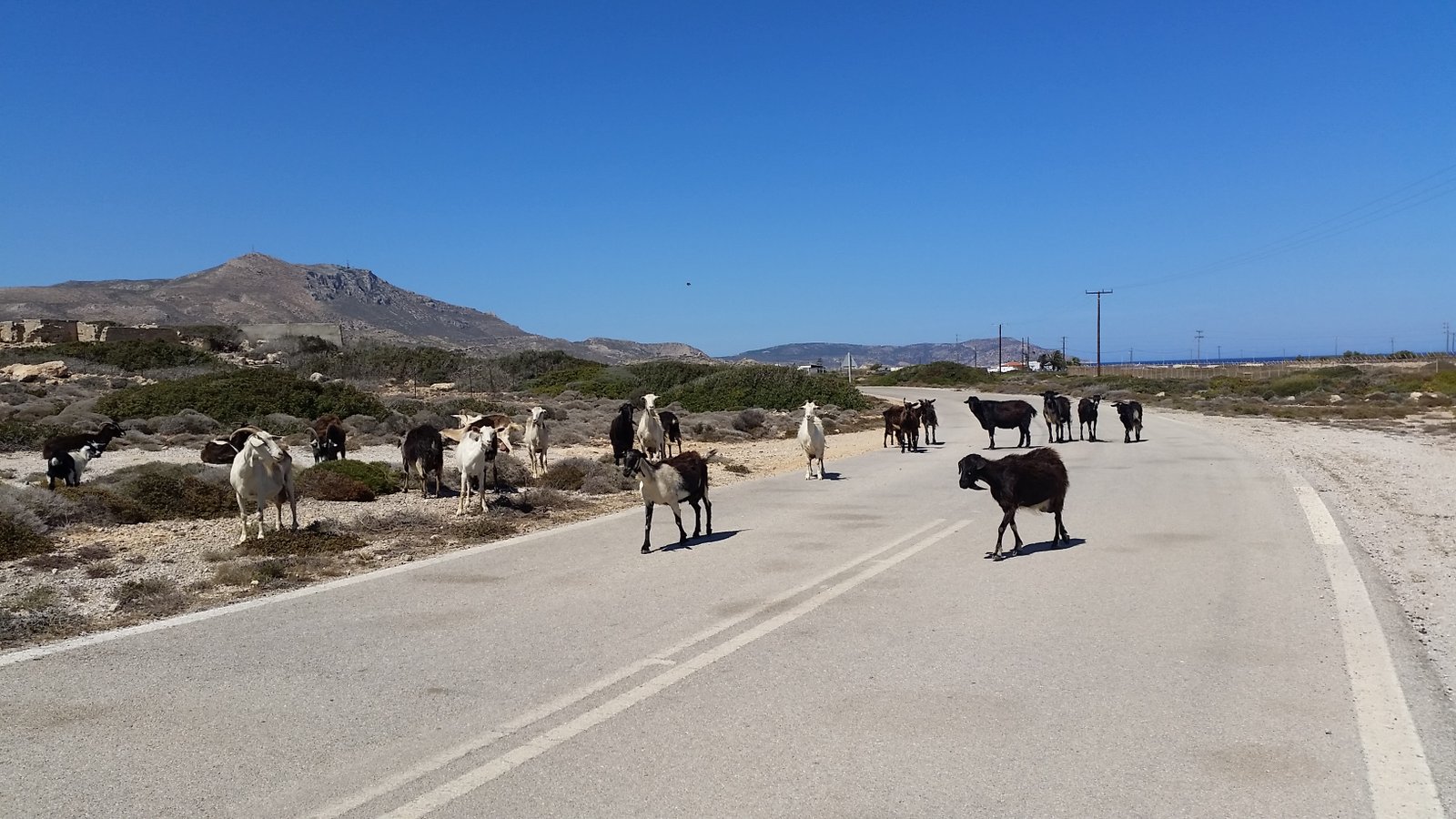
In Karpathos there are goats everywhere. On the roads, on the rocks, in the abandoned farmland, at the edges of the hairpin bends where the scrub is thickest. They're semi-free — they have an owner, they carry an identifying mark on the ear — but they live outdoors all year round, with no stall, grazing on whatever they find. The landscape of Karpathos is partly what it is because of them too: the low vegetation, the eroded slopes, the trails kept clear by generations of goats.
The milk of the Karpathos goats produces sitaka, the creamy fresh cheese eaten with honey; it also produces mizithra, drier and saltier; and it goes into the buttermilk used in the island's traditional cooking. The supply chain is short: the goat eats the wild herbs of the island — thyme, oregano, caper — and you can taste it in the flavour of the cheese.
I nearly hit a goat with the car three times in the same day. The third time I stopped. The goat looked at me. It didn't move. I was the one who drove off.
The Karpathian goats belong to a local breed adapted to the mountainous, arid terrain of the island. They're smaller than intensively farmed breeds, with long horns and a rough coat. They're not afraid of cars, not afraid of dogs, and not afraid of humans. They've decided the island is theirs too. They're not wrong.