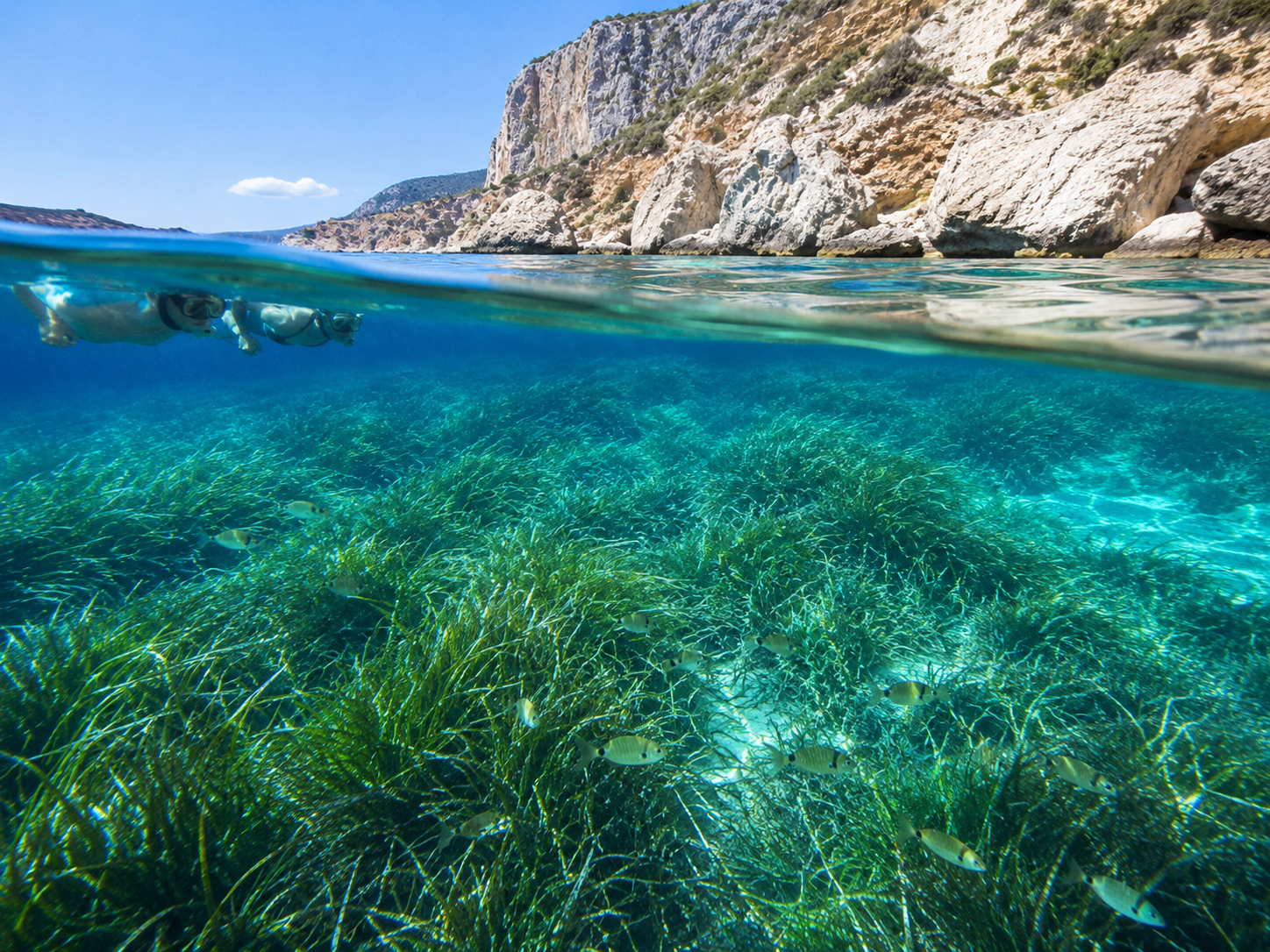
Karpathos isn't as famous for diving as the islands of mainland Greece or Rhodes. And that's a stroke of luck: the seabeds are less crowded, visibility is often excellent, and the marine biodiversity is that of an ecosystem not yet stressed by mass underwater tourism.
The meadows of Posidonia oceanica — the seagrass endemic to the Mediterranean, an indicator of water quality — cover wide stretches of the seabed around the island. Posidonia produces oxygen, provides shelter for hundreds of fish species, and stabilises the sandy bottom. The bays where the water is cleanest — Kyra Panagia, Ahata, Diakoftis — have posidonia meadows you can already see with a snorkelling mask.
The first time I put my head underwater at Apella, I saw an octopus walking across the seabed as if it were out for a stroll. It didn't look scared. It looked busy.
There are diving centres in Pigadia that organise day trips. The dive sites include rock formations along the south coast of the island, with sheer walls rich in gorgonians and sponges. For snorkelling, almost all the beaches of the east coast offer seabeds worth attention even without going below two or three metres.