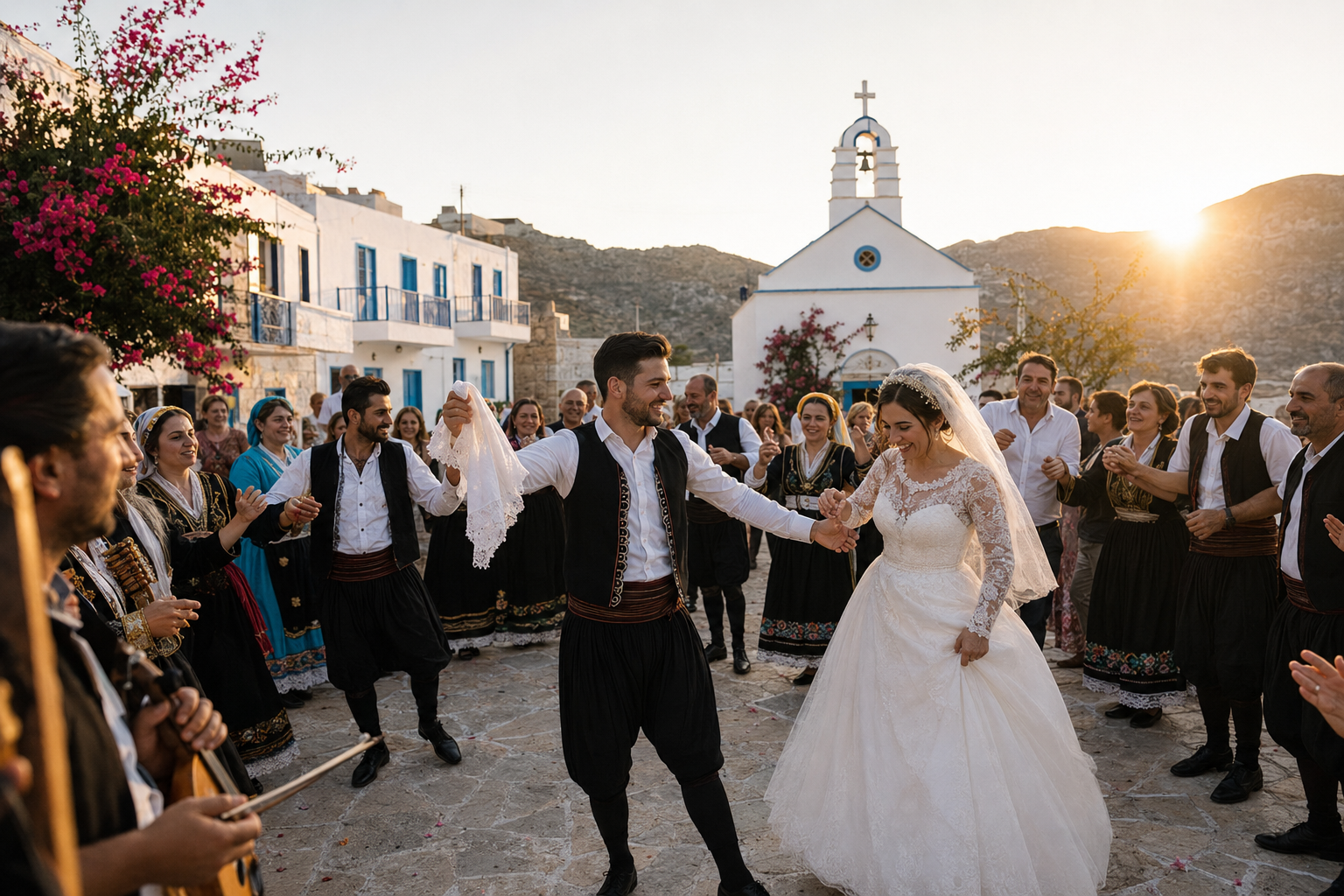
In many parts of Greece traditional weddings have shrunk to one-day events, similar to those in the rest of Europe. In Karpathos, particularly in the northern villages like Olympos, the traditional wedding still lasts three days — sometimes four — and involves the whole village. It's not an event you're invited to in the strict sense: if you're there, you're in it.
The first day is for the ritual preparations — decorating the newlyweds' bed, cooking food in communal cauldrons, preparing the traditional dress. The second is the ceremony and the main banquet. The third is dedicated to the improvised songs — the mandinades — that the participants exchange in rhyme as a poetic challenge. Whoever can improvise well is respected as much as the musician.
At a Karpathian wedding I understood that the celebration isn't the point. It's the means for remembering together who you are.
The dowry — the proikio — is still a practice found in Olympos, though it has evolved from the past. Traditionally it included the house, the land, the livestock and the hand-embroidered textiles. Today it's more symbolic, but the proikio ceremony still exists: on the morning of the wedding the bride's family carries the gifts in procession through the village, with the music of the lyra leading the way.